
Quick answer: Plastic and concrete water tanks need different cleaning in Islamabad. Plastic is lighter and easier to scrub, but scratches easily, so we use soft brushes. Concrete is porous, holds more sludge in its pores and corners, and usually needs pressure washing. Both are disinfected and rinsed. Call +92 332 5063036 for a fixed quote.
Why does the material matter?
Most tank cleaners in Islamabad treat every tank the same way. That is a mistake, because plastic and concrete behave differently. Plastic is smooth, light and flexible. Concrete is porous, rough and heavy. The same brush that cleans a concrete wall will scratch a plastic wall, and the scratches hold dirt and algae, or kai, so the tank gets dirty faster after the next clean.
The material also changes the time, the tools and the price. A plastic overhead tank usually takes 1 to 1.5 hours. A cement tank, or an overhead and underground tank together, usually takes 3 to 5 hours. Those figures come from the Muhammad Technical Services guide (Nov 2026). Knowing your tank material before you call means the quote is accurate and the team brings the right equipment.
How do I tell if my tank is plastic or concrete?
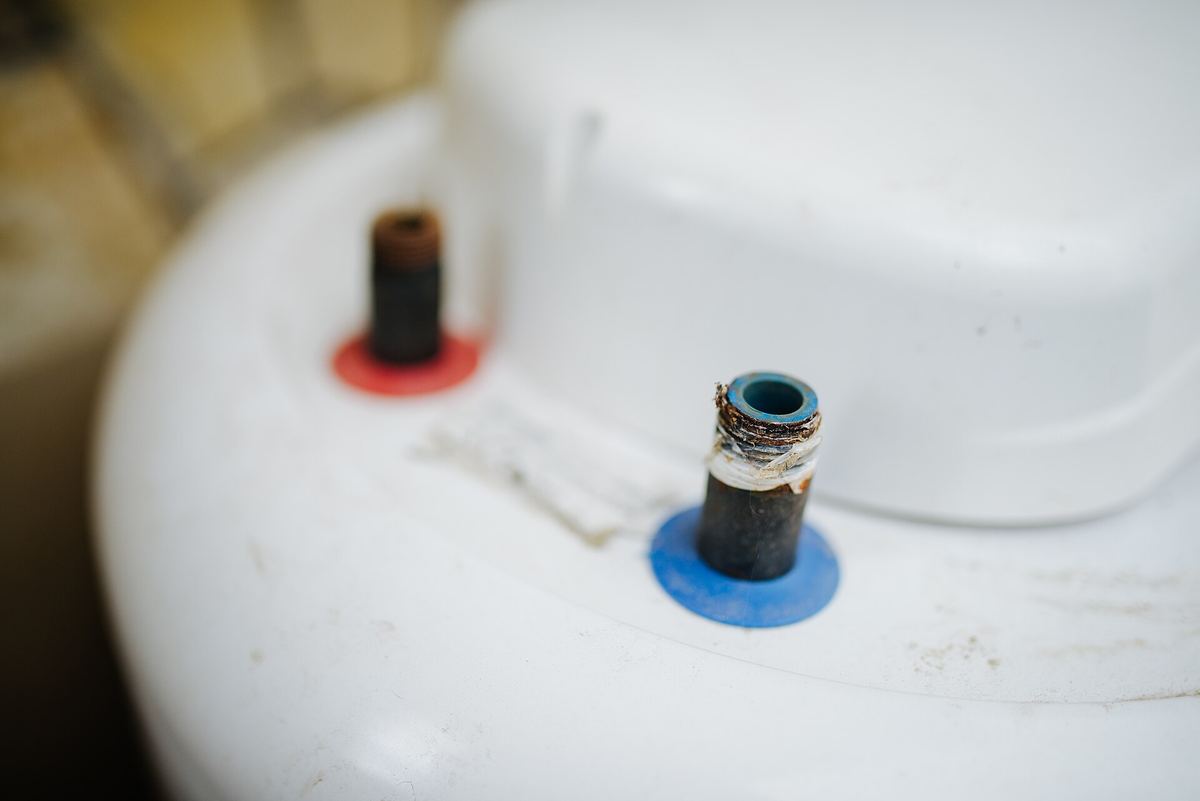
Most owners can tell in under a minute. Tap the wall of the tank. Plastic sounds hollow and feels smooth and slightly flexible. Concrete sounds solid and dull, feels rough and cold, and is usually built into the ground or the roof rather than placed on it.
| Check | Plastic tank | Concrete tank |
|---|---|---|
| Tap the wall | Hollow sound, smooth, slightly flexible | Solid dull sound, rough and cold |
| Size marking | Size moulded into the side, in litres or gallons | No marking, measured in feet, for example 6x6 ft |
| Where it sits | Placed on the roof, often black, blue or white | Built into the ground or the roof, grey cement finish |
| Typical position | Usually the overhead rooftop tank | Almost always the underground tank, sometimes rooftop |
| Lid | Plastic lid, often screwed or clipped on | Concrete slab lid, heavy, sometimes cracked |
If you are still not sure, send a photo of the tank and its lid, or tanki ka dhakkan, and we will tell you on the call. A photo of the inside, if the lid opens, helps even more. Fibre tanks, sometimes called fibreglass tanks, are cleaned like plastic tanks: soft brushes, no wire brush, no pressure washer on the walls.
Plastic vs concrete: the full comparison
| Plastic tank | Concrete tank | |
|---|---|---|
| Surface | Smooth, non-porous | Porous and rough, holds sludge in pores and corners |
| Main dirt | Sludge on the floor, algae on sunlit walls | Sludge, scale, algae and fungus in pores, joints and corners |
| Brushes | Soft, material-matched brushes only | Stiff brushes, plus pressure washer for cement |
| Wire brush | Never, it scratches the plastic | Not used on walls either, pressure washer instead |
| Pressure washer | No, too strong for plastic walls | Yes, the usual tool for cement |
| Typical time | 1 to 1.5 hours for a plastic overhead tank | Part of a 3 to 5 hour visit for both tanks |
| Typical size | 100 to 1,000 gallons | 6x6 to 10x10 ft and larger |
| Disinfection | Chlorine-based solution, rinse until clear | Chlorine-based solution, rinse until clear |
How is a plastic tank cleaned?
The eight steps are the same for every tank: drain the stored water, remove sludge by hand, bucket or sludge pump, scrub the walls and floor, clean the lid, inlet and overflow, disinfect with a chlorine-based solution, rinse until the water runs clear, vacuum out the remaining water, then refill. For plastic, the scrubbing step is gentler. Soft brushes clean the walls without scratching, and the corners and fittings are cleaned by hand.
Plastic tanks have their own problems. A black plastic tank on a roof gets hot in summer, and heat feeds algae. A cracked or loose lid lets light in, and light feeds algae too. So the lid check matters as much as the scrubbing: a lid that closes tight keeps the next clean further away. The full rooftop guide is on the overhead water tank cleaning page.
How is a concrete tank cleaned?
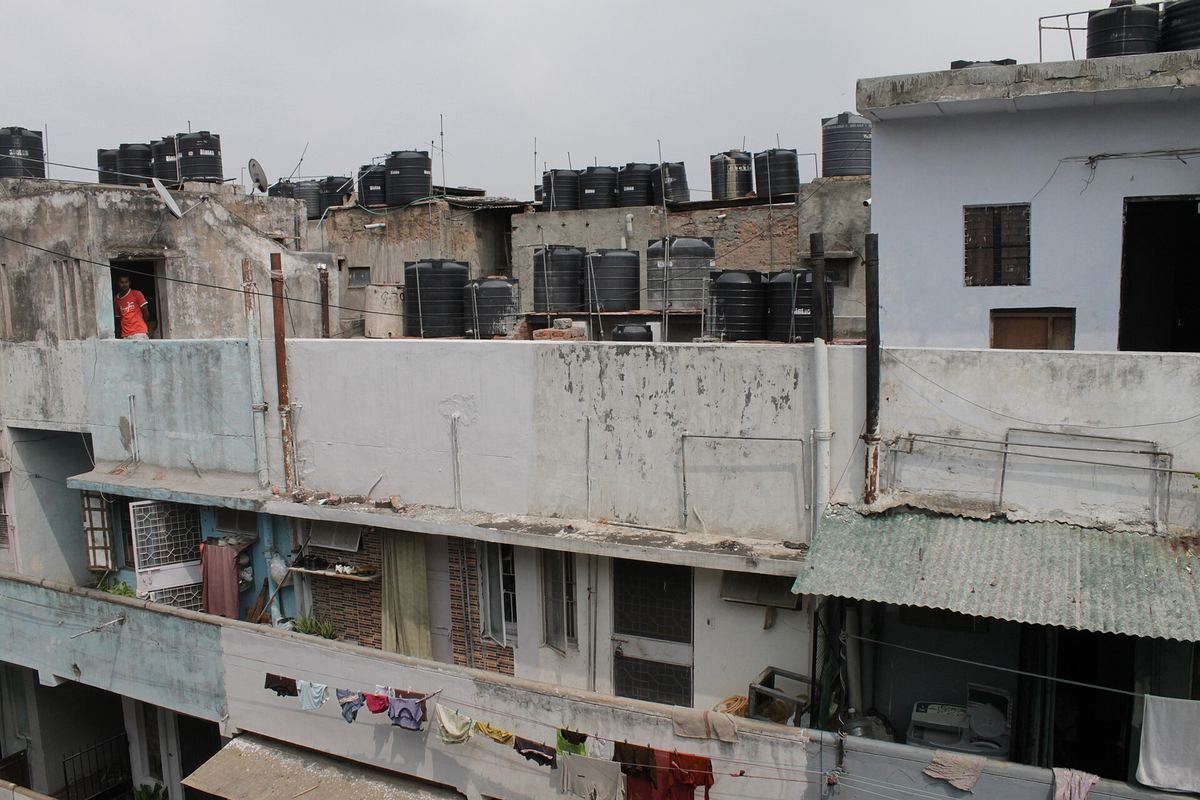
Concrete needs more work. Its rough, porous surface holds sludge, scale and fungus, or fafundi, in its pores and corners, and a brush alone cannot reach it all. That is why a pressure washer is the usual tool for cement, after the loose sludge has been lifted out by hand, bucket or sludge pump.
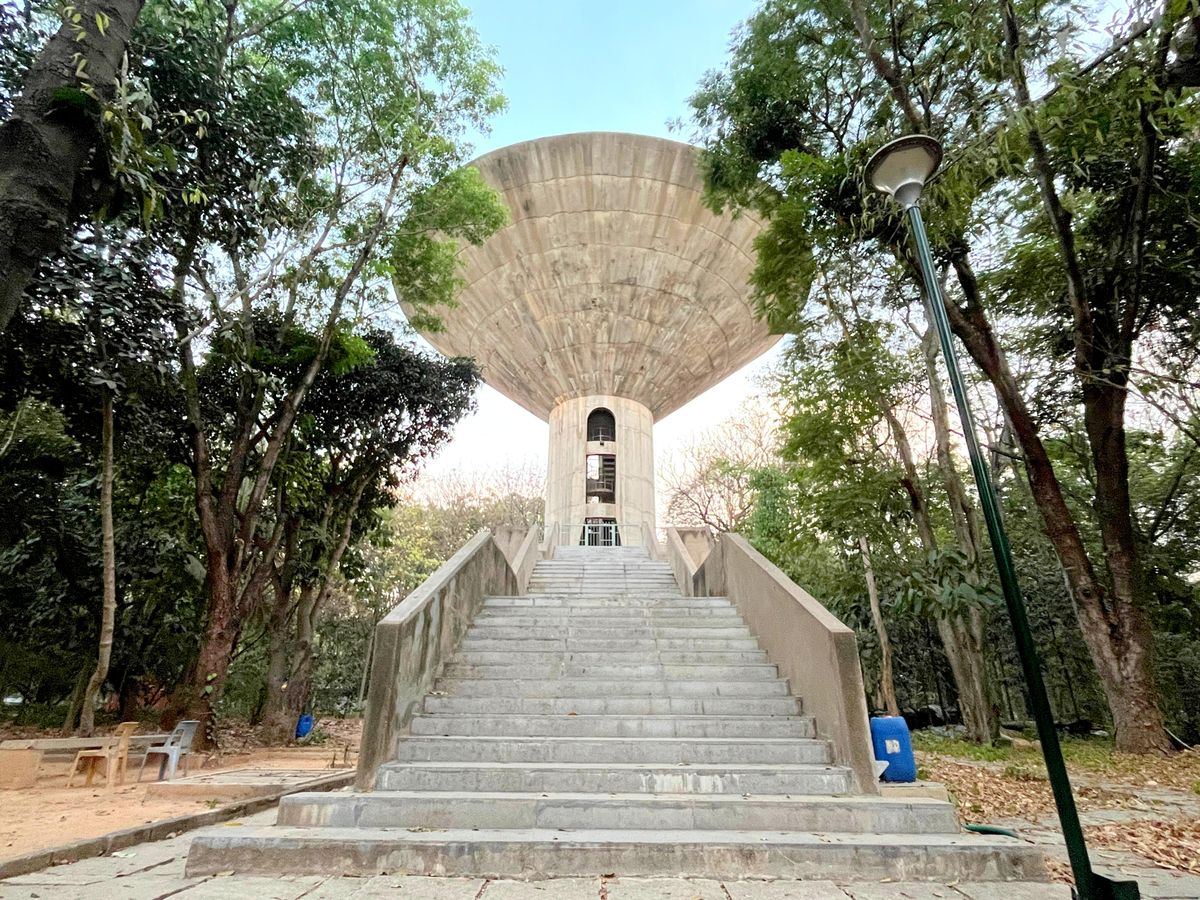
Concrete tanks are also the ones with the most sludge, because almost every underground tank in Islamabad is concrete, and the underground tank takes the first flush of CDA, tanker and bore water. The dewatering step matters more here: a submersible pump drains the tank, then a wet vacuum removes the last sludge and rinse water. The full underground guide is on the underground water tank cleaning page.
Old concrete tanks have one more problem: cracks. A crack in the wall or floor lets groundwater in and clean water out, and it holds dirt that no amount of scrubbing removes. Cleaning does not include crack repair. If we see a crack while cleaning, we point it out so you can arrange a repair.
Which costs more to clean?
Concrete usually costs more than plastic, because it takes longer and usually needs pressure washing. No Islamabad provider publishes a fixed price by tank type and size, so the honest answer is a provider-published range, with the source labelled.
| Tank | Provider-published range | Source |
|---|---|---|
| Plastic overhead, 100 to 300 gallons | PKR 1,500 to 2,500 | Muhammad Technical Services, Nov 2026 guide |
| Plastic overhead, 400 to 500 gallons | PKR 2,000 to 3,500 | Muhammad Technical Services, Nov 2026 guide |
| Cement overhead, 6x6 to 8x8 ft | PKR 2,500 to 4,500 | Muhammad Technical Services, Nov 2026 guide |
| Cement overhead, 10x10 ft and larger | PKR 4,500 to 7,000 and above | Muhammad Technical Services, Nov 2026 guide |
| Underground, small to medium | PKR 2,500 to 6,000 | Muhammad Technical Services, Nov 2026 guide |
| Both tanks, typical house | PKR 5,000 to 10,000 | Muhammad Technical Services, Nov 2026 guide |
These are provider-published ranges, not our fixed price. What changes the price is the tank size, the material, how much sludge has built up, and how easy the tank is to reach. The full breakdown is on the water tank cleaning cost page, and the exact quote for your tank comes on the call.
How often should each type be cleaned?
The schedule is the same for both materials, because it depends on the water source, not the tank. Homes on CDA or municipal water clean every 6 months. Bore water needs cleaning every 3 to 6 months, and tanker water every 3 to 4 months. Clean right after the monsoon as well, because silt-laden water leaves extra sludge behind.
A concrete tank may look dirtier sooner, because its rough surface holds sludge where you can see it. A plastic tank may look cleaner for longer, because its smooth walls hide less dirt. Neither changes the interval. The full guide is on the how often to clean your water tank page.
What is not included?
Cleaning does not include crack repair, valve or motor replacement, waterproofing, lab water testing, or unblocking pipes. Cleaning also does not remove arsenic, TDS or hardness from water. It removes sludge, sediment, algae and the dirt that builds up inside the tank.
What to have ready when you call
Four things make the call short and the quote accurate: your tank material (plastic or concrete), your tank size in gallons, litres or feet, your area or sector, and a photo of the tank and its lid if you can take one. With those four things, we can give you a fixed quote before work starts.
Related pages: all water tank cleaning services, underground tank cleaning, overhead tank cleaning.
Frequently asked questions
Tap the wall. Plastic sounds hollow and feels smooth and slightly flexible, and most plastic tanks have the size moulded into the side in litres or gallons. Concrete sounds solid and dull, feels rough and cold, and is usually built into the ground or the roof. A photo of the tank and its lid is usually enough for us to tell on the call.
Concrete is usually harder. It is porous, so sludge, scale and algae sit in its pores and corners, and it usually needs pressure washing. Plastic is smoother and lighter, so it is easier to scrub, but it scratches easily and the scratches hold dirt, so it needs soft brushes and a gentler hand.
No. A wire brush scratches plastic, and the scratches hold dirt and algae, so the tank gets dirty faster after the next clean. Plastic tanks are scrubbed with soft, material-matched brushes. Cement tanks are the ones that usually need pressure washing.
Usually, yes. Provider-published ranges from the Muhammad Technical Services guide of Nov 2026 put a plastic overhead tank of 100 to 300 gallons at PKR 1,500 to 2,500, while a cement overhead tank of 6x6 to 8x8 feet is PKR 2,500 to 4,500. Concrete takes longer and usually needs pressure washing. The exact quote comes on the call.
The schedule is the same for both materials, because it depends on the water source, not the tank. Homes on CDA water clean every 6 months, bore water every 3 to 6 months, and tanker water every 3 to 4 months. A concrete tank may look dirtier sooner because its rough surface holds sludge, but the cleaning interval is the same.
Neither is better in every way. Concrete tanks are larger, stronger and last a long time, which is why almost every underground tank in Islamabad is concrete. Plastic tanks are lighter, easier to fit on a roof, and easier to scrub. What matters for cleaning is not which is better, but that each one is cleaned with the right tools.
Hours: 9 AM - 5 PM. Address: Bahria Town Phase 4, Islamabad, 46220, Pakistan.