
Quick answer: Yes. Tank cleaning is safe when a chlorine based disinfectant is used as the label directs, left for its contact time, and rinsed until the water runs clear before refill. No acid is used, the team wears gloves and protective gear, and the tank is kept ventilated. Call +92 332 5063036 to ask about the chemicals before you book.
It is a fair question, and it is the question most callers ask before they book. A chemical goes into the tank that holds your drinking water, so you should know what it is, how long it stays there, and what happens before the tank is filled again. The short answer is that cleaning is safe when the disinfectant is used at the strength the label gives, left for its contact time, and rinsed out before the refill. The rest of this page explains each part of that, and what we never do.
What chemicals are used to clean a water tank?
Professional tank cleaning uses a chlorine based disinfectant, the same family of disinfectant used to treat drinking water, plus a germ killing spray for the walls of the tank. The disinfectant is applied to the scrubbed walls and floor, left for the contact time written on the product label, and then rinsed away. Contact time is the time the disinfectant needs to sit on the surface to do its work, and it is set by the product label, not by guesswork. After the contact time, the tank is rinsed until the water runs clear, vacuumed out, and only then refilled with clean water.
The team wears gloves and protective gear while working, and the tank is kept ventilated with the lid off. Children are kept away from the tank while the work is going on. If you want to know the exact product before you book, ask on the call and we will tell you what will be used on your tank.
What is never used in tank cleaning?
| Used | Never used | Why it matters |
|---|---|---|
| Chlorine based disinfectant | Acid of any kind | Acid can damage the tank and leaves a smell in the water for days |
| Germ killing spray | Scented detergent or surf | Detergent leaves residue and smell, and is not a disinfectant |
| Brushes matched to the tank | Wire brush on plastic | A wire brush scratches plastic, and dirt settles into the scratches faster |
| Clean rinse water | Dirty water flushed into the pipes | All taps and the main line are closed during cleaning, so dirty water never goes back into your supply |
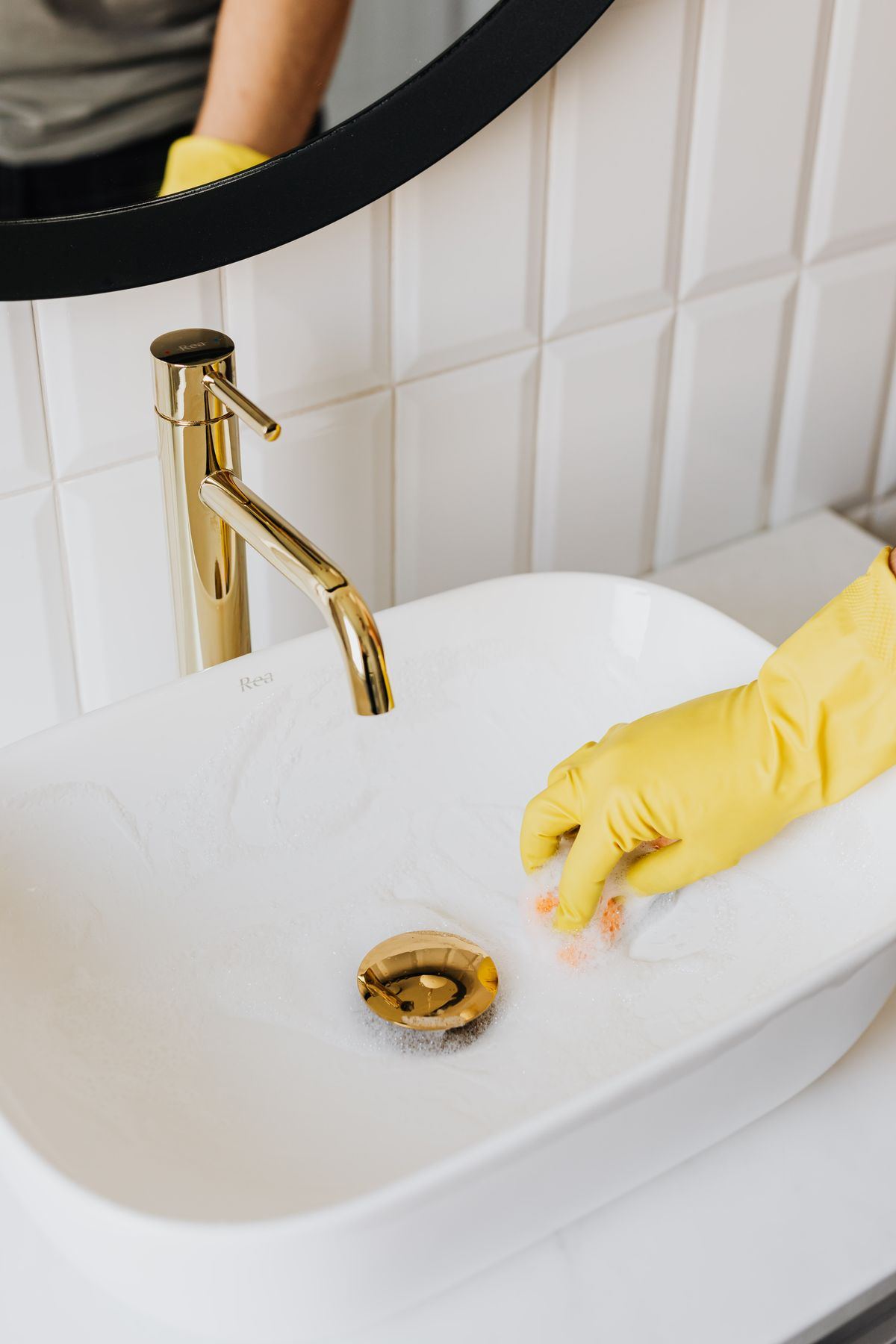
Acid deserves a clear warning, because it still appears in DIY videos and comments. People who have cleaned a tank with acid report that the smell stays in the water for days, and acid is not recommended for a tank that holds drinking water. Our cleaning never uses acid, and we do not recommend it at home either. If a video tells you to use acid, or tartari, a tartaric acid powder, to loosen dirt, treat that as a warning sign, not a tip. Scrubbing with a brush and disinfecting with a chlorine tablet or solution, followed by a proper rinse, is the safe method.
Is the disinfectant safe for drinking water?
Yes, when it is used as the label directs and rinsed out before the refill. The disinfectant is not left in the tank. It is applied, left for its contact time, and then rinsed until the water runs clear. The refilled water is flushed through the taps for a few minutes before use, the first flush, so any last trace of rinse water clears the pipes. Follow the product label, and if the water smells strongly of chlorine after a clean, run the taps a little longer and call us if the smell does not clear.
One honest limit: cleaning a tank does not change what is in the water itself. It removes sludge, algae, sediment and the dirt that builds up inside the tank, but it does not remove arsenic, dissolved salts or hardness from bore water. If your water is hard or salty, that comes from the source, not from the tank, and cleaning will not fix it. A filter or treatment system is a separate question, and we will say so plainly if you ask.
Is tank cleaning safe for children and babies?
Children and babies are the reason most parents ask this question, so it deserves a direct answer. The water is safe to use after the tank has been rinsed and refilled and the taps have been flushed, as described above. During the clean itself, children are kept away from the tank, the ladder and the chemicals, and the tank lid is put back and closed tight before the team leaves. The lid matters more than people think: a loose or cracked tanki ka dhakkan lets dust, insects and rainwater into the tank, and that is how a clean tank gets dirty again. If the lid is cracked or does not close properly, the report after the clean will say so.
How can you check the cleaning was done safely?
Ask to see the inside of the tank before the lid goes back. That is the simplest check there is, and a proper team will offer it without being asked. The floor should be free of mud, the walls should look scrubbed rather than just rinsed, the lid should close tight, and the disinfectant should have been used and then rinsed, not left standing in the tank. The written report after the clean notes the disinfectant used and the next due date, so the record is there if you need it later. For the full list of checks, see what is included in water tank cleaning, and for the full process, see how it works.
Frequently asked questions
Yes, when it is done with a chlorine based disinfectant used as the label directs, left for its contact time, and rinsed until the water runs clear before the tank is refilled. No acid is used, the team wears gloves and protective gear, the tank is kept ventilated, and children are kept away during the work. Ask us on the call if you want the product details before you book.
Yes. The disinfectant is a chlorine based solution used at the strength the label gives for drinking water, left for its contact time, and then rinsed out until the water runs clear before the tank is refilled. The refilled water is flushed through the taps for a few minutes before use. The disinfectant is not left in the tank.
It can smell faintly of chlorine at first, and that usually clears after the taps are run for a few minutes. If the smell is strong or does not clear, run the taps longer and call us. A strong lingering smell can mean the tank was not rinsed enough, and that is something we will come back and check.
Wait until the tank has been rinsed, refilled and the taps have been flushed for a few minutes, the first flush. That clears the last of the rinse water from the pipes. After that the water is ready to use as normal. If you are unsure, run a glass of water and check that it runs clear and has no strong smell.
Yes, after the tank has been rinsed and refilled and the taps flushed, the water is safe to use as normal. During the clean, children are kept away from the tank, the ladder and the chemicals. The lid is put back and closed tight before the team leaves, so nothing can fall or climb into the tank afterwards.
We never use acid of any kind, including tartari, and we never use scented detergent or surf as a disinfectant. We also never use a wire brush on a plastic tank, because it scratches the surface and dirt settles into the scratches faster. Only a chlorine based disinfectant and a germ killing spray are used, as the product labels direct, followed by a full rinse.
Ask us about the chemicals before you book
Call and we will tell you exactly what will be used on your tank, and what will be rinsed out before the refill.
9 AM - 5 PM. Bahria Town Phase 4, Islamabad.